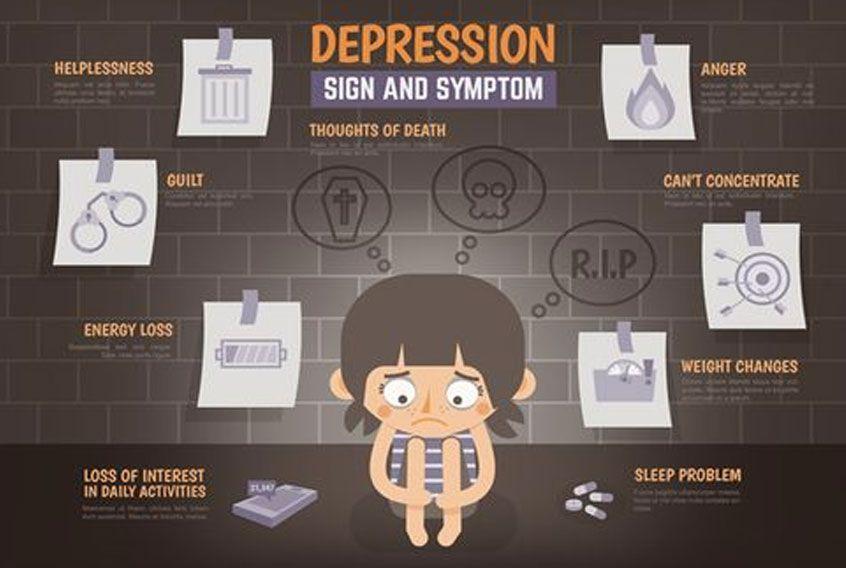
We all feel emotion, we all get upset, can feel low, angry and overjoyed, but when do these emotional responses become something of a medical concern? When are these feelings inappropriate, too intense, or lasting too long? When is the emotional state you are in classed as depression? In light of the 5th revision of the influential Diagnostic and Statistical Manual of Mental Disorders (DSM- 5), where a person can now be diagnosed as undergoing a “major depressive episode” if showing depressive symptoms for more than two weeks after bereavement, leading researchers in a special section of the SAGE journal Emotion Review argue that we need to take a different approach to diagnosis and that how we define “normal” emotion should be used to inform clinical practice.
The DSM- 5 specifies that the clinician should exert judgment when diagnosing depression after bereavement but the continuum between what emotional state is normal and what is abnormal makes the process difficult, especially in the absence of agreed upon criteria. “Over the millennia scientists from many different disciplines have struggled with the issue of defining what is normal and what is abnormal or pathological with respect to human bodily or mental states and human behaviour”, Klaus Scherer and Marc Mehu of the Swiss Center of Affective Sciences commented. They added:
“Psychiatrists and clinical psychologists are often called upon to reliably distinguish between normal and abnormal emotions. Increasingly this is done with the help of diagnostic category systems developed by professional associations and health organizations like the Diagnostic and Statistical Manual for Mental Disorders (DSM). In consequence, the definition of abnormal emotionality proposed by these classification systems has an extraordinary impact on the diagnosis and treatment of what is perceived as emotional disorders or disturbances.”
In order to combat this and ensure that clinical practice is diagnosing people with depression correctly, increased interaction between fundamental emotion research and the training of practitioners in the area of emotion disorder is needed. Scherer and Mehu emphasise the importance of understanding the mechanism underlying the triggering of emotional episodes and the factors that might be responsible for their potential malfunctioning.
They conclude: “It seems reasonable to assume that better understanding of the specific psychobiological mechanisms underlying emotional disorders can potentially lead to new treatments. The contributions in this special section demonstrate the important role that interdisciplinary emotion research could play in the understanding and treatment of emotional disorders and prepare the ground for future collaboration.”
###
Prof. Klaus R. Scherer is the Founding Director of the Swiss Centre for Affective Sciences University of Geneva – CISA and Dr. Marc Mehu is an Assistant Professor of Psychology Webster Vienna Private University.
For press copies of the articles from the special section of Emotion Review please contact Katie Baker, PR and Public Affairs Manager by email: katie.baker@sagepub.co.uk or tel: +44 (0)20 7324 8719.
“Normal and Abnormal Emotions – The Quandary of Diagnosing Affective Disorder: Introduction and Overview”, Klaus Scherer and Marc Mehu.
“When and Why Are Emotions Disturbed? Suggestions Based on Theory and Data From Emotion Research”, Klaus R. Scherer
“The Appraisal Bias Model of Cognitive Vulnerability to Depression”, Marc Mehu and Klaus Scherer.
Emotion Review (EMR) is a peer reviewed, quarterly published journal in association with the International Society for Research on Emotion (ISRE). The aim of the journal is to publish theoretical, conceptual and review papers (often with commentaries) to enhance scientific understanding of emotion theory and research. It accepts papers from a wide disciplinary spectrum – wherever emotion research is active. This journal is a member of the Committee on Publication Ethics (COPE).
SAGE Founded 50 years ago by Sara Miller McCune to support the dissemination of usable knowledge and educate a global community, SAGE publishes more than 800 journals and over 800 new books each year, spanning a wide range of subject areas. A growing selection of library products includes archives, data, case studies, conference highlights and video. SAGE remains majority owned by our founder and after her lifetime will become owned by a charitable trust that secures the company’s continued independence. Principal offices are located in Los Angeles, London, New Delhi, Singapore and Washington DC.
###
Katie Baker
katie.baker@sagepub.co.uk
44-020-732-48719